
The Science Behind Spinal Decompression Therapy
Spinal decompression isn’t just a “stretch”—it’s a precisely controlled, computer-guided process designed to change the pressure dynamics inside your spinal discs.
Spinal Decompression Therapy creates negative intradiscal pressure
Between each vertebra are discs that act like cushions. When a disc becomes bulging or herniated, it can press outward on nearby nerves, causing pain, numbness, or tingling.
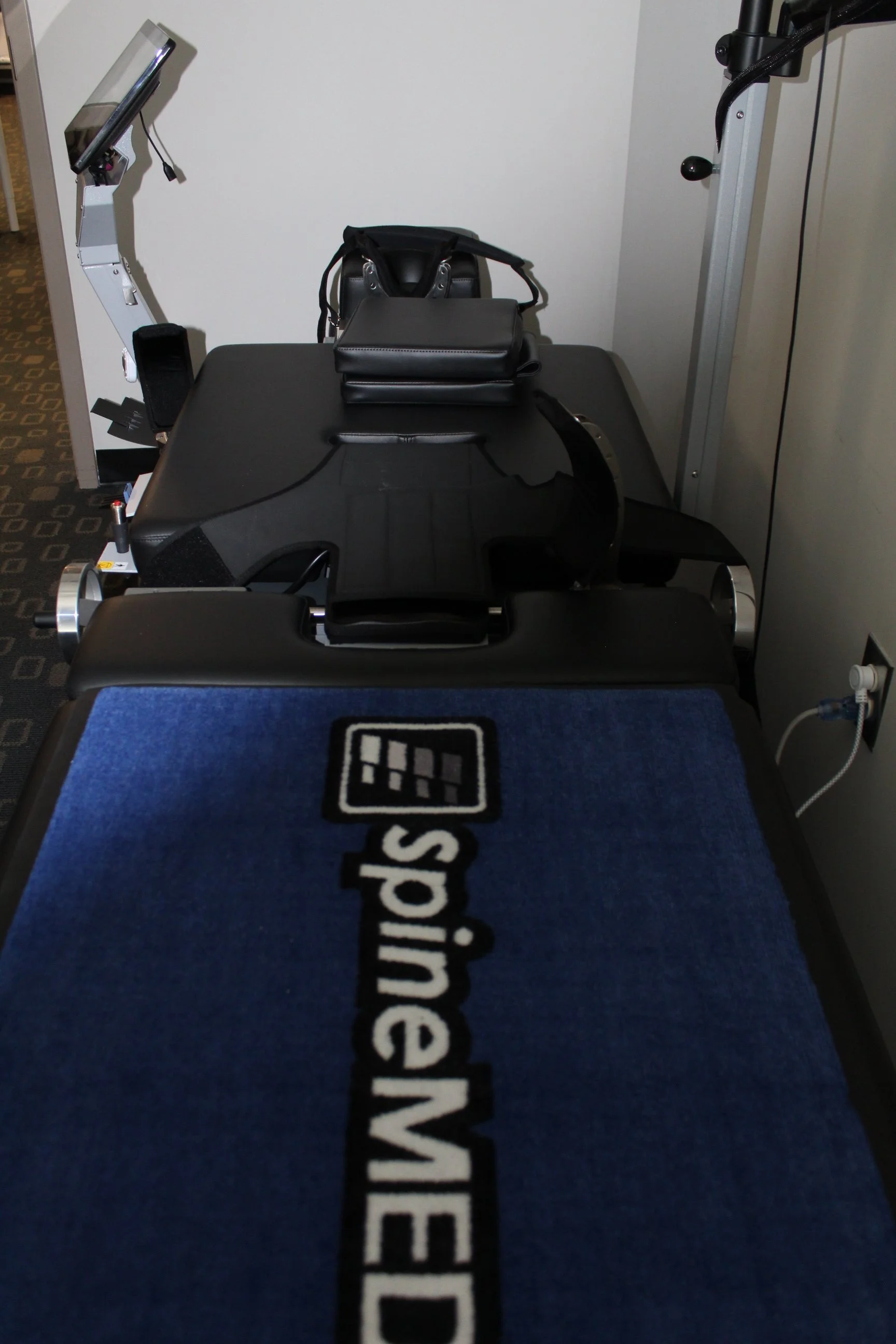
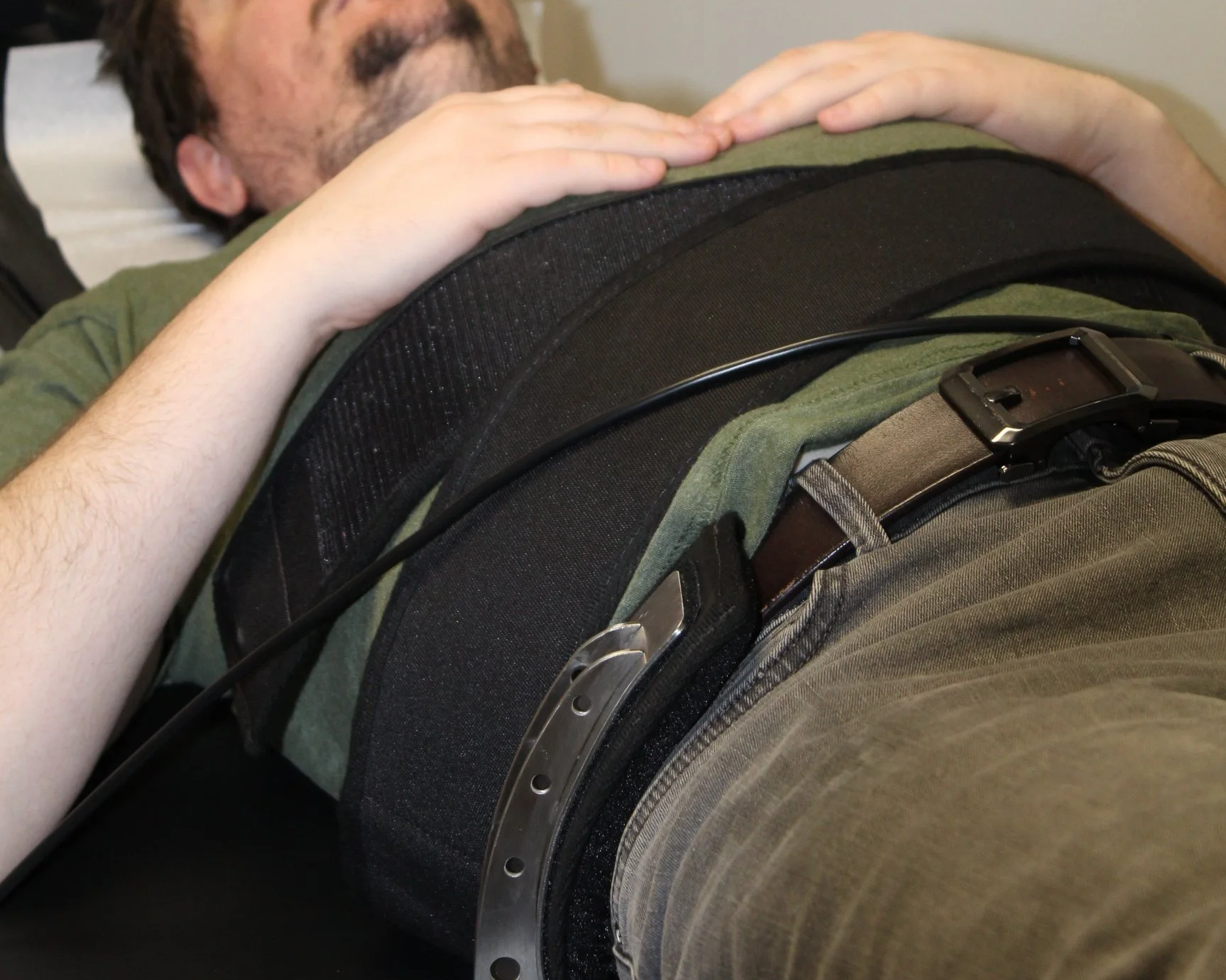
Spinal decompression uses a motorized table to apply a specific pulling force that creates negative pressure inside the disc (think of a vacuum effect).
This negative pressure can help pull herniated or bulging disc material back inward
It reduces compression on nearby nerves
It directly targets the source of disc-related pain, not just symptoms
This is something traditional traction often cannot achieve consistently because it lacks the same level of precision and control.
Spinal Decompression aids in nutrient exchange & disc rehydration
Discs don’t have a direct blood supply—they rely on movement and pressure changes to absorb nutrients.
Spinal decompression creates alternating cycles of stretch and relaxation that:
Promote diffusion of oxygen, water, and nutrients into the disc
Help rehydrate and repair damaged disc tissue
Support long-term healing, not just short-term relief
This is especially important for conditions like degenerative disc disease, where discs have dried out and lost height.
Targeted, Segment-Specific Treatment
Not all back pain is the same—and decompression accounts for that. Modern systems can:
Isolate specific spinal levels (like L4-L5 or L5-S1)
Adjust angle and force based on your condition
Customize each session based on your progress
This level of specificity is what makes it especially effective for disc injuries and post-accident cases.